+86-13073105066
admin@longshubearing.com




Importance of Automotive Bearings to Vehicle Performance and Safety
2026-04-03
Automotive bearings play a key role in maintaining the efficiency, reliability and safety of a vehicle. These parts are critical to reducing friction, withstanding stress, and ensuring the smooth operation of various vehicle systems. Below is a detailed analysis of their importance to vehicle performance and safety:
1. Contribution to vehicle performance
---Smooth operation and reduced friction:
Bearings minimize friction between moving parts, ensuring efficient transfer of power from the engine to the wheels.
This results in better acceleration, improved fuel efficiency and reduced energy loss.
---Increasing component durability:
By reducing wear, bearings extend the life of key vehicle components such as wheels, axles and transmissions.
High-performance bearings also withstand extreme conditions such as high speeds and heavy loads, ensuring long-term reliability.
---Accuracy and stability:
Bearings maintain alignment in rotating systems, preventing unnecessary vibration and noise.
Carefully designed bearings contribute to a smoother ride and improve vehicle handling.

2. Role in ensuring vehicle safety
---Reliable steering and suspension:
Bearings in steering and suspension systems provide precise vehicle control, especially when cornering or making sharp maneuvers.
They maintain the integrity of these systems under varying loads, thereby increasing safety on the road.
--- Reliable operation of the braking system:
The bearings in the wheel assemblies ensure proper alignment of the brake components.
This ensures consistent braking performance, which is critical to preventing accidents.
---Prevent overheating and failure:
High-quality bearings reduce friction and heat, preventing potential failure of critical systems such as transmissions or wheels.
This is especially important during long-term operation or in extreme environmental conditions.
3. Fuel efficiency and environmental benefits
Bearings made using advanced designs and materials reduce energy loss due to friction, improving fuel efficiency.
Reduced energy consumption also leads to reduced greenhouse gas emissions, which is in line with environmental standards and sustainability goals.
4. Examples of key applications
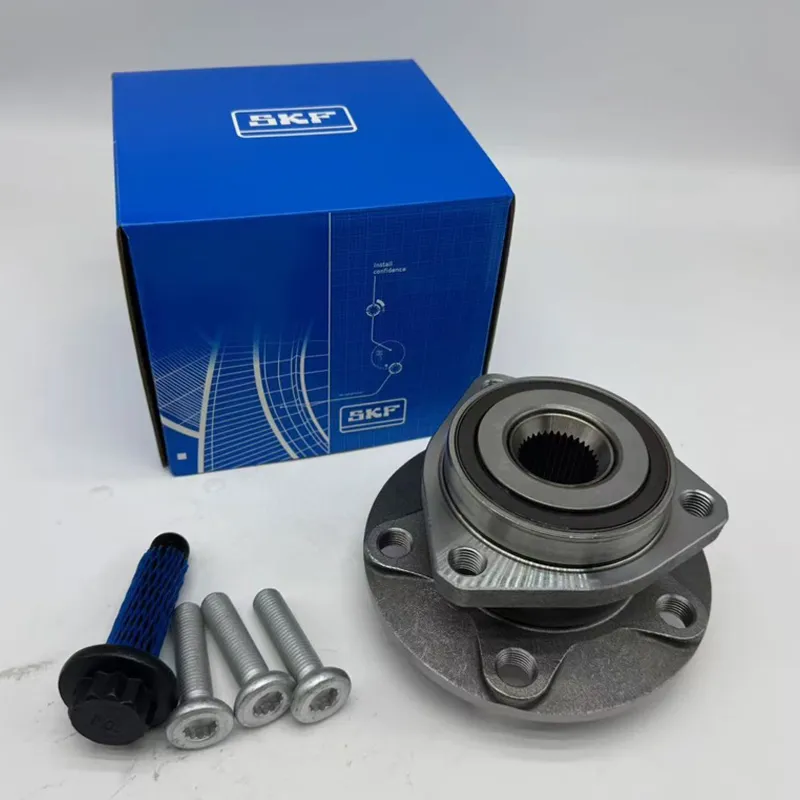
Wheel Bearings: Provide smooth wheel rotation and stability, which is critical for safe driving at all speeds.
Transmission Bearings: Improve gear shift accuracy and ensure efficient power transfer.
Motor Bearings: Protect engine parts from excessive wear, ensuring stable operation and safety for a long time.
Types of Automotive Bearings
Automotive bearings are key components that support rotation or turning. They reduce friction during linear motion and withstand the loads of a variety of automotive systems. Below are the main functions, types of bearings, their applications in the automotive industry, as well as their description and applications.
Wheel bearings: ensure smooth rotation of wheels.
Transmission: reduce friction of rotating parts.
Steering System: Provides precise steering with minimal resistance.
Electric Motors: Used in cooling fans and alternators to ensure efficient operation.